
Can You Repair Render Yourself
Whether Can You Repair Render Yourself is a genuine option depends almost entirely on the scale and type of damage. A small surface crack on a sound wall is a very different job from a section of blown render that has lost adhesion from the bricks behind — one is within reach of a careful homeowner; the other rarely is.
When DIY Render Repair Is Realistic
Small, isolated cracks on an otherwise sound wall are the most realistic candidates for a DIY repair. The deciding factors are scale, location, and what lies beneath.
A surface crack running a few centimetres across flat render, with no hollow sound when tapped and no sign of water ingress, is genuinely manageable for most people. Damage that covers a large area, sits near a window reveal, or is at height is a different matter. The skill required is modest for a small patch; the margin for error grows quickly once the affected area expands or the substrate condition becomes uncertain.
Are Hairline Cracks in Render Normal
Hairline cracks are a normal part of how render behaves as it dries, cures, and responds to seasonal temperature movement. Render is a rigid coating applied to a wall that will always move slightly.
A cosmetic hairline crack — one that is very fine, shallow, and does not extend through the full render coat — is usually nothing to worry about. The question is whether water can get in. On a crack narrow enough that surface tension bridges it, rain penetration is unlikely. Where a crack is wide enough to admit water, and especially where it runs alongside a window edge or near a joint, it warrants closer attention. Cracks that widen over time, or appear in a pattern that maps onto the blockwork or brickwork behind, may not be purely cosmetic.
What Blown Render Is and Why It Matters
Blown render is render that has lost its bond with the substrate and become detached, even if the surface still looks intact. Tap the wall firmly with a knuckle: a hollow, drum-like sound indicates the render has separated from the wall behind.
Adhesion failure can happen for several reasons — moisture getting behind the render and freeze-thawing the bond away, inadequate preparation when the render was first applied, or substrate movement over time. Once a section has blown, it will not re-bond on its own. Applying new render over the top without cutting away the loose section is one of the most common mistakes in DIY repair work: the loose material will continue to detach, taking the new patch with it.
Any blown section must be cut away cleanly before a repair can begin.
Is Cracked Render a Structural Defect
Cracked render is not automatically a structural defect, but some crack patterns do point to movement in the wall itself rather than the surface coating.
The distinction matters. Render cracks as a response to thermal movement, moisture cycling, and the normal settling of a building. These are surface phenomena. Cracks that follow the line of mortar courses, appear in a stair-step pattern across brickwork, or widen noticeably from top to bottom suggest the wall itself may be moving. Wide cracks that run diagonally from window or door corners are a similar signal.
If cracks reappear after a repair, or if the crack pattern is irregular and extensive, get a professional assessment before attempting further work. Patching over active structural movement will fail, and disguising the symptoms can make it harder to diagnose the underlying cause later.
How to Fix Cracks in Rendered Walls Yourself
A mortar or filler repair to a render crack follows a clear sequence, and skipping steps is where most DIY repairs fail.
Rake the crack out first. Use a grinder or cold chisel to open the crack into a clean V-shape or square edge. Filler applied into a hairline gap rarely bonds well enough to last — the crack needs a mechanical key.
Apply PVA bonding agent. Brush diluted PVA into the raked crack and allow it to become tacky before applying mortar. This improves adhesion significantly, especially on older, dusty or porous substrates.
Choose the right filler. For fine cracks in otherwise sound render, a flexible exterior crack filler is appropriate — it accommodates slight movement. For deeper or wider cracks, a mortar-based repair (using the same sand-and-cement ratio as the original render) is more durable.
Feather the edges. Use a damp trowel or sponge float to blend the patch into the surrounding render so it sits flush. A patch that stands proud will shadow in raking light and look worse than the original crack.
Colour matching is worth managing expectations on. Patched areas rarely disappear entirely.
Common Problems With Silicone Render Repairs
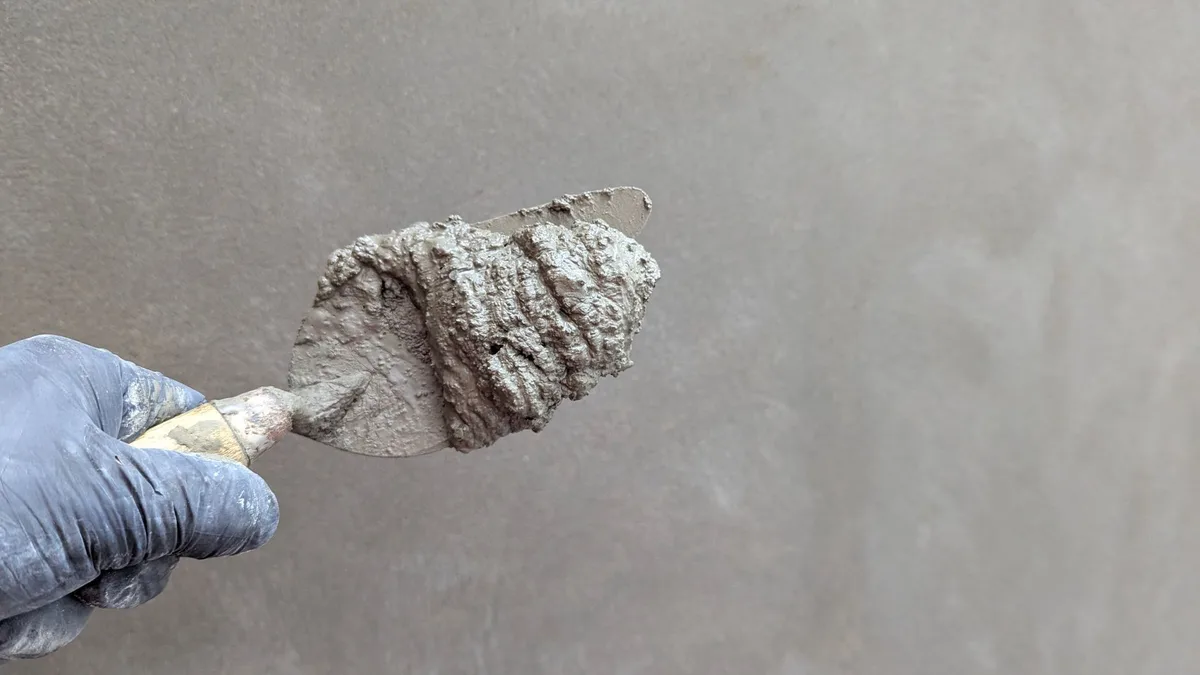
Silicone render — a polymer-modified, ready-mixed finish coat — is harder to repair invisibly than traditional sand-and-cement render. Colour-matching a patch on silicone render is the most common difficulty.
Silicone render is a flexible, hydrophobic coating that comes pre-pigmented from the manufacturer. The existing coat will have weathered and faded slightly, and new material from even the same batch will not match exactly. On a small area, this can be noticeable.
The application technique also differs from traditional render. Silicone render is typically applied at a controlled thickness (usually around 1.5 mm to 3 mm, depending on the aggregate size) and worked with a plastic float in a tight circular motion. Applying it too thickly, or tooling it at the wrong time, produces a visibly different texture.
A poor patch on silicone render often looks worse than the original damage, a flat repair visible from the street where the original crack was only obvious up close. For anything beyond a very small area, consider whether a full section replacement would give a better result.
When to Hand the Job to a Professional
Some render repairs are genuinely beyond the scope of DIY, either because of scale, condition, or safety.
Large areas of blown or cracked render, anything beyond an isolated patch, are better handled professionally. The prep work alone (cutting away loose material, treating the substrate, applying a bonding coat) becomes significant, and an uneven repair across a large section is difficult to disguise.
Where water has got behind the render and saturated the masonry, there is a substrate problem to address before any surface repair will hold. Applying new render over wet or salt-contaminated bricks accelerates failure.
Repairs at height, near window edges, or in corners where a scaffold or tower is needed raise safety concerns that most homeowners should not take on without proper access equipment.
For an overview of what a professional repair involves, the professional render repair service page covers the process in detail. You can also read more about render patch repair options and guidance on finding a render repair specialist near you.
Frequently Asked Questions
The questions below come up regularly when homeowners are deciding how to approach a render problem.
What is blown render?
Blown render is render that has detached from the substrate behind it while remaining in place on the wall surface. Tapping the affected area produces a hollow sound. The loss of adhesion is usually caused by moisture ingress, freeze-thaw cycling, or inadequate preparation when the render was originally applied. Blown sections must be cut back before any repair can hold.
How to fix cracks in house render?
Rake the crack out to a clean edge, apply diluted PVA to the opening and allow it to become tacky, then fill with either a flexible exterior filler (for fine cracks) or a sand-and-cement mortar (for deeper repairs). Feather the edges flat with a damp float. The repair will not be invisible, but done carefully it will be weatherproof and durable.
What are some common problems with silicone render?
Colour-matching is the main difficulty, pre-pigmented silicone render weathers over time, and a patch from new stock will not match the existing surface exactly. Texture variation is also common when technique differs slightly from the original application. These factors mean small patches on silicone render can be more visually apparent than the same repair would be on traditional sand-and-cement.
Is cracked render a structural defect?
Most render cracking is not structural, it reflects surface movement as the coating responds to temperature and moisture change. Cracks become more significant when they follow the mortar courses of the brickwork, when they widen from top to bottom, or when they reappear after repair. These patterns suggest movement in the structure itself and warrant a professional assessment before further work is attempted.
Are hairline cracks in render normal?
Yes. Hairline cracks develop as render dries and as the wall moves seasonally. They are generally cosmetic and do not let in water unless they are wide enough to break the surface tension at the opening. Monitor them over time, a crack that stays stable is unlikely to be a problem, while one that widens or extends should be investigated.
If you'd like a professional to assess or carry out the repair, get in touch with City Renderers and we'll connect you with a render specialist. Call +447588418550 for a free quote.