

Render Repair: Professional External Rendering Restoration
Failing render doesn't fix itself. Whether you're dealing with hairline fractures, blown sections, or large areas of delaminated material, Render Repair carried out correctly stops water ingress and prevents the kind of structural damage that costs far more to fix later. City Renderers assesses every job on site, identifies the root cause, and repairs the render in a way that matches the existing finish as closely as possible.
Book a free site visit to get a proper assessment — not a guess over the phone.
What Causes Render to Fail?
Render fails for several reasons, and identifying the correct cause before starting work matters. Applying a patch over a damp or unstable substrate simply delays the problem.
Common causes include:
- Water trapped behind the render causing freeze-thaw expansion
- Movement in the substrate — particularly around window and door reveals
- Carbonation of the backing coat over time
- Impact damage to the outer surface
- Poor original application, including insufficient key or incompatible materials
- Settlement cracks in the building structure transferring to the render face
A site visit lets the team probe the render, check for hollow spots, and identify whether the substrate is sound before any repair work begins.
Our Render Repair Services
Repair Cracked Render
Cracks range from hairline surface crazing to structural fractures that reach the substrate. Surface crazing on cement render is often cosmetic and can be treated with a flexible coating. Deeper cracks — particularly those wider than 0.5 mm or that follow mortar joints — usually indicate movement and need to be raked out, backed with a bonding compound, and filled with a mortar or polymer-modified material before finishing.
Proper repair involves cutting back the crack edges to sound material, never just filling flush. Bridging a crack with filler without removing loose edges leads to the repair lifting within months.
Repair Crack in Render Around Reveals
Window and door reveals are the most common location to find a crack in render. The junction between the frame and the render is a movement point — thermal expansion of the frame, settlement, and vibration all concentrate stress here. At reveals, the affected area is raked back, the frame junction is packed and sealed with a flexible sealant bead, and the render is built back up in compatible coats.
Repair External Render — Blown and Delaminated Sections
When render loses adhesion to the substrate, it sounds hollow when tapped. These blown sections must be removed entirely — there is no repair method that re-bonds delaminated render from the outside. The loose material is cut back to a firm edge, the exposed substrate is cleaned and treated with a bonding slurry or primer as required, and new render is applied in the correct number of coats to match the thickness of the surrounding finish.
K Render Repair
K Render is a polymer-modified, through-coloured acrylic render system. Repair work requires matching the existing texture — typically a scraped or float finish, and blending colour from the same manufacturer's range. Because acrylic renders weather and fade over time, a perfect colour match at the repair area is not always achievable on aged surfaces. City Renderers advises on this at the site visit stage so there are no surprises at handover.
We are K Rend accredited.
Pebbledash Render Repair
Pebbledash is one of the harder finishes to repair invisibly. The stone aggregate is thrown onto a wet scratch coat, and matching the stone type, size, and distribution by hand takes care and the right materials. Small areas can be repaired with good results when the correct aggregate is sourced. On larger areas, or where the existing pebbledash has faded significantly, full overcoating with a matching textured render system is sometimes the more practical long-term approach. The site visit establishes which route makes sense for your property.
Exterior Render Repair, Recoating and Overcoating
Not all exterior render repair means cutting back to the substrate. Where the existing render is structurally sound but shows widespread surface cracking or crazing, a flexible exterior coating or thin silicone render overcoat can be applied over the prepared surface. This approach seals hairline cracks, restores the appearance, and adds a weatherproof layer without the disruption and cost of a full removal. Surface preparation, cleaning, priming, and treating any active cracks before overcoating, determines how long this repair holds.
House Render Repair
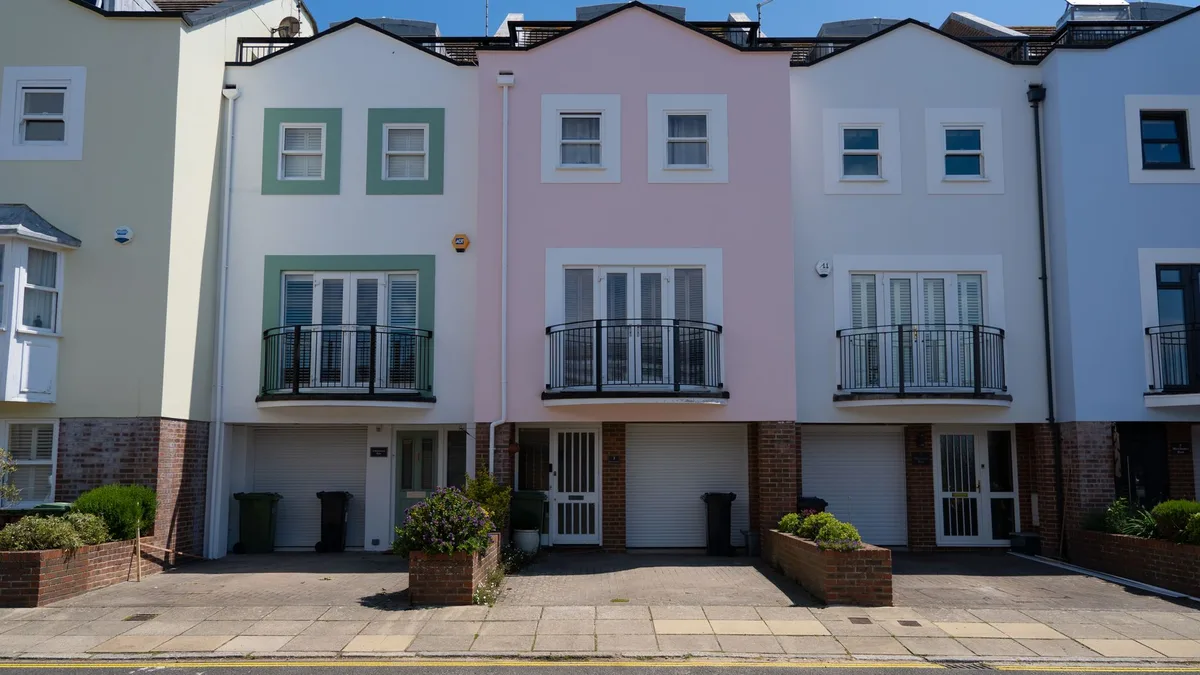
Domestic render repair covers the full range of situations: a patch of blown pebbledash on a 1930s semi, a cracked section around a bay window, failed render on a gable end, or widespread crazing on a cement render that has reached the end of its serviceable life. The approach depends on the substrate, brick, block, timber frame, and the existing render type. We assess the whole elevation, not just the obviously damaged section, to identify areas that are likely to fail in the near future.
Professional vs DIY Approach
| Professional Repair | DIY Repair | |
|---|---|---|
| Finish Quality | Matched texture and colour, applied in correct coat sequence | Variable, bagged mix and hand tools rarely replicate a machine-applied or specialist finish |
| Coverage Uniformity | Consistent thickness achieved using gauges and screeds | Often too thin at edges, too thick in the centre, causes differential drying and cracking |
| Application Method | Float, scrape, or machine apply to match existing system | Typically hand-applied patch, which reads visually against surrounding render |
| Preparation Required | Full diagnosis, substrate treatment, and priming before any render is applied | Preparation often limited to brushing out loose material before filling |
| Suitability for Commercial Scale | Suitable for large elevations, multi-storey access, and complex reveals | Practical only on very small areas at low level |
| Typical Use Cases | Failed render sections, blown areas, structural cracks, full elevation repairs | Very minor cosmetic surface cracks on accessible single-storey areas |
How Much Does Render Repair Cost?
Every project is quoted individually. Costs depend on the size of the affected area, the render type in place, the substrate condition, the number of coats required, and the access situation, a first-floor elevation with no existing scaffold is a different job to a ground-floor patch at arm's reach.
Key cost factors for any render repair project include:
- Total surface area of failed or cracked render
- Whether the substrate needs treatment, drying out, or structural repair before rendering begins
- The render system required, cement, polymer-modified, acrylic, or silicone
- Matching requirements for colour and texture on visible elevations
- Access: working height, scaffold requirements, restricted site conditions
- Preparation work: grinding out cracks, removing blown sections, priming
- Finish specification: scraped, floated, pebbledash, or smooth
For an accurate figure, a site visit is the only reliable way to assess the scope. Book a free site visit and City Renderers will provide a written quote covering materials, preparation, and application, no hidden additions at invoice stage.
Our Render Repair Process
- Site assessment, a member of the team visits the property, taps the render to identify blown areas, maps the cracking pattern, and checks the substrate condition. This is the step that determines the correct repair method.
- Written quote, once the scope is understood, a written quote is prepared covering preparation, materials, and application. You know what is included before work starts.
- Substrate preparation, loose, blown, and delaminated render is cut back to a firm edge. Active cracks are raked out. The substrate is cleaned, dried where necessary, and primed or treated with a bonding agent appropriate to the render system being applied.
- Render application, new render is applied in the correct sequence of coats, gauged to match the surrounding thickness. Texture is replicated by hand or machine to match the existing finish as closely as the material allows.
- Inspection and sign-off, the finished area is checked against the surrounding render for texture consistency, edge neatness, and surface integrity. Any remedial touches are made before the job is signed off.
Every job comes with our 10-30 Years Coating warranty.
Frequently Asked Questions
Q: How do I know if my render needs repairing or replacing entirely?
If hollow sections account for a small proportion of the total elevation, targeted repair is usually the right approach. When hollow areas are widespread, the render has reached the end of its life, or the substrate has failed, a full strip and re-render is often more cost-effective over ten years than repeated patch repairs. The site visit gives a clear answer for your specific property.
Q: Can you match the texture and colour of my existing render?
Texture matching is achievable in most cases, particularly on pebbledash, scraped finishes, and smooth float finishes. Colour matching on K Rend and other through-coloured systems is possible from the manufacturer's range, though aged render will have weathered away from its original shade. City Renderers advises on what level of match is realistic before work starts so expectations are accurate.
Q: Is Render Repair suitable for commercial properties?
Exterior render repair is carried out on warehouses, retail units, offices, industrial units, healthcare buildings, and schools, any property type where render is the external wall finish. For commercial clients, the written quote covers access requirements, phasing around business operations, and the render specification needed to meet the building's use and exposure conditions.
Q: Do I need to do anything before the site visit?
Nothing is needed in advance. The assessment covers the full elevation, not just the area you've already noticed, failed render often extends beyond the visible crack or damp patch. Clear access to the affected elevation is helpful, but the team will work around parked vehicles or stored materials where access allows.
Q: What happens if the substrate behind the render is damp?
Render applied over a wet substrate will fail. If damp is identified during the site assessment, the quote will include the steps needed, source identification, drying time, and any remedial treatment, before render is applied. We are CSCS accredited. We are CITB accredited. Applying render over an unresolved damp problem is not something City Renderers will do; it would simply result in another call-out.
Related Services
If the render on your property has failed across the whole elevation, repair may not be the most cost-effective route. See our house rendering page for full elevation work, or our silicone rendering page for a modern, low-maintenance finish that carries a long service life. For properties with existing pebbledash, the pebbledash render page covers overcoating and removal options.
Get a Written Quote for Render Repair
We are CSCS accredited. We are K Rend accredited. We are CITB accredited. Every job comes with our 10-30 Years Coating warranty. We have been trading for 6 years. We respond within 24 hours.
City Renderers provides written quotes for every render repair project, no verbal estimates, no figures that shift between site visit and invoice. The quote covers preparation, materials, coat sequence, and finish specification so you know what is included before the work starts.
Book a free site visit today, call +447588418550 or use the contact form below.
If you're not ready to commit to a site visit yet, Request Your Free Quote and describe the damage. We'll come back to you with initial guidance and next steps.