
House Rendering Cost
House rendering Cost is one of the most searched questions homeowners ask before starting an exterior project — and one of the hardest to answer with a single figure. The price of rendering a house depends on a combination of variables that only a site survey can properly untangle. This guide works through each of those variables so you arrive at a quote conversation already knowing what to ask.
Why House Rendering Costs Vary So Much
There is no single average House rendering Cost because several unrelated variables combine to produce the final figure. Wall area, render system, substrate condition, and access requirements all influence price independently — and they multiply each other. A large house with failing substrate, difficult access, and a premium system will cost substantially more than a compact property with sound brickwork and straightforward scaffolding, even if both owners were quoted the same system.
Costs also differ significantly between render types. Cement render, monocouche, silicone, and insulated render systems each carry different material costs and labour requirements. Understanding which system is right for a property is as important as understanding how big the property is.
What Affects the Cost of Rendering a House
Several distinct factors determine what a contractor will price when they visit a property.
Wall area is the starting point. Renderers work from a measured surface area, accounting for the walls to be covered minus openings such as windows and doors. More square metres means more material and more labour time.
Substrate condition is often the biggest hidden variable. A wall in sound condition needs only cleaning and priming. A wall with loose, crumbling, or contaminated existing render requires hacking back, repairing, and re-keying before any new system goes on. That preparation work adds both time and cost.
Scaffolding and access contribute significantly to overall spend. A standard two-storey property with clear perimeter access is straightforward. A three-storey gable end, a narrow side passage, or a property adjoining another building all create access challenges that affect the scaffolding specification required.
Detailing complexity is frequently underestimated. Windows, soffits, corners, reveals, and any decorative features all require careful hand work. A property with many windows, bay fronts, or ornate brickwork will take longer to detail cleanly than a plain elevation, and that time is reflected in the labour element of the quote.
For a full explanation of the different approaches available, the types of house rendering guide covers each system in detail.

How Each Render System Affects the Overall Price
The render system specified is one of the clearest price differentiators on any project.
Cement render is a traditional sand-and-cement mix applied in multiple coats. Materials are relatively low in cost, but the multi-coat process is labour-intensive. It is most commonly used on properties where a painted finish is intended or where budget is the primary constraint.
Monocouche render is a factory-blended single-coat system applied to a consistent depth, typically around 15–20 mm. The through-colour finish eliminates the need for painting, which reduces long-term maintenance. The material cost is higher than plain cement, but the single-coat application can offset some of the additional labour time.
Silicone render is a polymer-modified finish applied as a thin coat, usually 1.5–3 mm, over a reinforced base coat. Its hydrophobic properties repel water while allowing the wall to breathe, which helps prevent damp and algae build-up. Material costs are higher than cement or monocouche, and the system requires a primed, reinforced substrate — but the extended lifespan and low maintenance requirement are the reasons it has become the most popular system on new and refurbished properties.
Insulated render with external wall insulation (EWI) is the most involved system. Rigid insulation boards are fixed to the existing wall, a reinforced base coat is applied over the top, and a silicone or thin-coat finish completes the system. The additional materials, fixings, and installation time make this the highest-cost option, though the thermal performance benefits are considerable.
Our house rendering service covers all of these systems and can help identify which is most appropriate for a given property type.
Additional Costs to Build Into Your Budget
Beyond the core render application, several associated costs are worth accounting for before accepting a quote.
Scaffolding is usually priced separately or itemised clearly within a full quote. It represents a meaningful proportion of total project cost on taller or awkwardly accessed properties and should not be treated as an afterthought.
Surface preparation and priming includes cleaning down the existing substrate, applying bonding agents or primers suited to the render system, and carrying out any patching of damaged areas. Skipping or minimising this stage is the most common reason render fails prematurely.
Removal of existing render or cladding adds both skip costs and labour time. Where a property has failed pebbledash, painted cement, or old dry-dash cladding, that material needs to be mechanically removed and the substrate assessed before any new system begins.
What Is the Difference Between Render and Plaster
Render is an external finish applied to outside walls; plaster is an internal finish applied to interior walls and ceilings. The two are related in concept but different in mix, specification, and purpose.
External render is formulated to resist weathering, moisture, and thermal movement. It typically includes additives for flexibility and water resistance that would be unnecessary indoors. Plaster mixes are designed for smooth internal finishes in controlled conditions and would not perform adequately on an exposed exterior.
Does Rendering Affect House Value
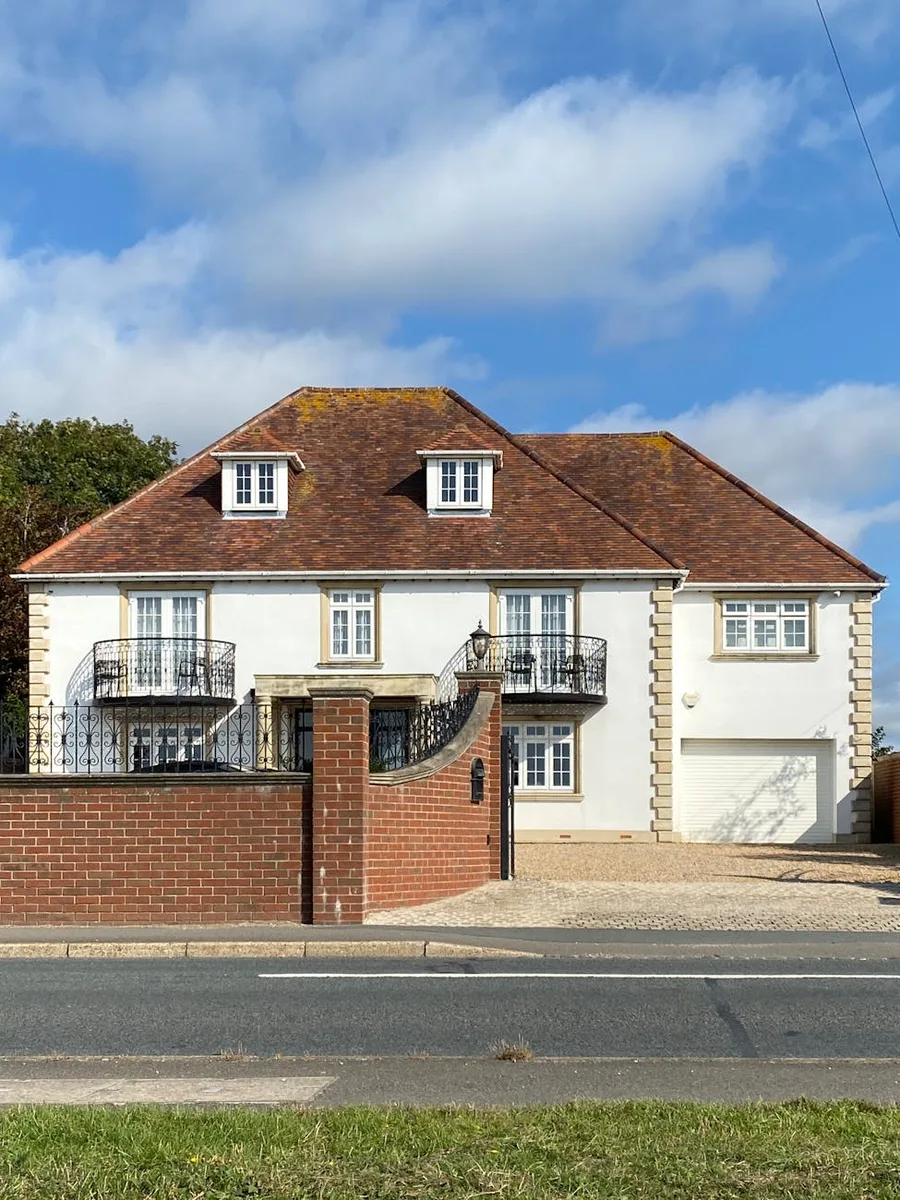
Rendering have a positive effect on buyer appeal and perceived value, though the degree depends on the quality of finish, the system used, and the existing condition of the property. A fresh, clean render finish improves kerb appeal significantly and signals to buyers that the exterior envelope is weatherproofed and low-maintenance.
The does rendering a house add value guide covers this question in more depth, including the factors that determine whether the investment is likely to be reflected in a sale price.
What Are the Disadvantages of Rendering
Render is not without drawbacks, and it is worth understanding the risks before committing.
Cracking is the most common issue. It occurs when a render system lacks sufficient flexibility to accommodate seasonal movement in the substrate, or when the substrate preparation was inadequate. Silicone and polymer-modified systems handle movement better than traditional cement render.
Moisture trapping is a concern if render is applied to a wall that already has damp problems, or if a vapour-impermeable system is used on an older solid-wall property. The render can seal moisture in rather than allowing the wall to dry out. Matching system specification to the property type is essential.
Maintenance requirements vary by system. Painted cement render needs repainting on a regular cycle. Silicone and monocouche finishes are self-cleaning to a degree, but no render system is entirely maintenance-free over its full lifespan.
How to Get a Clear Answer on Your Rendering Cost
An accurate House rendering Cost figure can only come from a site survey. No formula or online calculator can account for the specific combination of wall area, substrate condition, access constraints, and system choice that applies to a given property.
During a quote visit, an installer will typically assess the wall area by measurement, probe the existing substrate for soundness, evaluate access requirements and scaffolding needs, discuss the finish specification and system options, and identify any preparatory work needed before installation begins.
Arriving at that conversation with a clear sense of which system you are interested in, and what condition your existing walls are in, will make the quote more accurate and the comparison between different installers more straightforward.
How much does it take to render a house?
The total cost depends on wall area, render system, substrate condition, access requirements, and the amount of preparation work needed. Because these factors combine differently on every property, the only reliable figure comes from a site survey and written quote. General guidance on what shapes that figure is covered throughout this guide.
What is the typical cost per square metre for cement render?
Cement render is priced per square metre, and the rate varies depending on how many coats are needed, what preparation the substrate requires, and the complexity of the detailing involved. No figure can be given without a measured survey of the specific property.
What is the difference between render and plaster?
Render is an external coating designed to protect exterior walls from weather, moisture, and thermal movement. Plaster is an internal coating designed for smooth, stable interior surfaces. The two use different mixes suited to their different environments and are not interchangeable.
What are the disadvantages of rendering?
The main risks are cracking from substrate movement, moisture trapping if the wrong system is used on a damp or solid-wall property, and ongoing maintenance depending on which finish is specified. Choosing the right system for the property type and ensuring thorough preparation before application reduces all of these risks considerably.
Does rendering reduce house value?
Rendering does not typically reduce house value. A well-executed render finish in good condition generally improves kerb appeal and signals a weatherproofed, maintained exterior. Value impact depends on the quality of the finish, the system used, and whether the style suits the property — poorly executed or visually mismatched render can have a neutral or negative effect.
If you are ready to find out what your project would actually cost, contact us for a quote to be connected with a rendering installer who can assess your property and provide an accurate figure.