
Render Repair Near Me
When render starts showing cracks, hollow patches, or blown sections, searching for Render Repair Near Me is exactly the right instinct — catching damage early nearly always costs less than leaving it to worsen. This guide covers what causes render to fail, which types can be repaired, when to call a professional, and how to choose the right specialist for the job.
Why Render Repair Matters
Damaged render is rarely just a cosmetic issue. Once a crack or hollow spot forms, moisture finds its way behind the surface — and once moisture is in, the damage accelerates quickly. Water trapped behind render expands in frost, forcing sections further away from the substrate. That process turns a hairline crack into a blown section, and a blown section into a patch of bare masonry exposed to every weather cycle.
The common damage types to look for are:
- Cracks — fine surface crazing is usually superficial, but wider or deeper cracks can allow water ingress
- Hollow spots — a dull, drum-like sound when you tap the wall suggests the render has lost adhesion to the substrate underneath
- Blown sections — render that has physically detached and is visibly bowing or crumbling away
Left untreated, any of these issues can lead to damp penetration into the wall itself, with consequences for insulation, internal decoration, and structural masonry over time.
What Types of Render Can Be Repaired
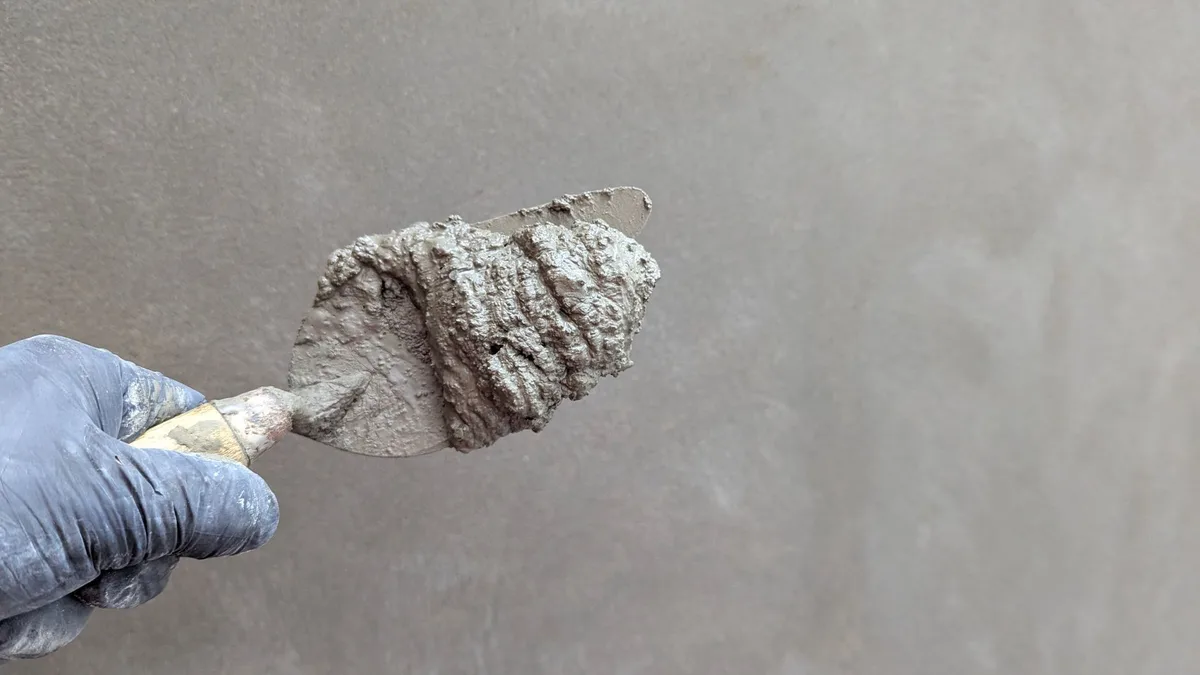
Most render types can be repaired, though the approach differs significantly depending on the material. Sand and cement render is the most straightforward to patch — it is widely available and easy to match in terms of application method, though colour matching on weathered surfaces can be tricky. Silicone render is more flexible by nature, which means it is less prone to cracking in the first place, but when repairs are needed a silicone-compatible mix must be used to maintain that flexibility across the joint.
Monocouche render — a single-coat, through-coloured system, presents the greatest challenge for patch repairs, because the colour is integral to the mix. Small patches are often visible once the repair has dried and weathered differently from the original. Lime render, used on older and traditionally built properties, must be repaired with a compatible lime-based mix; using a hard sand-and-cement patch on a lime render will trap moisture and cause the surrounding render to fail.
Matching the existing render matters both for appearance and performance. A patch that is harder or less breathable than the surrounding material often causes secondary cracking at the edges of the repair.
For detailed guidance on patching specifically, see our Render patch repair guide.
Can You Repair Render Yourself?
Minor surface cracks, those under around 1 mm wide and with no sign of hollow sections nearby, are a reasonable DIY task for a confident homeowner using the correct filler or pointing mortar. Cleaning the crack out, undercutting slightly to give the repair something to grip, and applying a compatible material in thin layers is achievable with care.
The risks come when the diagnosis is wrong. A hairline crack that appears superficial may be a sign of larger hollow sections underneath. Filling over a blown area traps moisture and leads to early failure. Using the wrong material, applying a sand-and-cement mix over a silicone or lime render, for example, can cause further damage to the surrounding wall.
Professional assessment is necessary when:
- You can hear hollow sounds when tapping around the damaged area
- Cracks are wider than 2 mm or running diagonally (which may indicate structural movement)
- The render is visibly bowing or has fallen away in sections
- The property is older and may have lime render requiring specialist knowledge
Our guide on Can you repair render yourself covers the practicalities in more detail.
What Affects the Cost of Render Repair
Render repair costs vary considerably, and any figure given without a site inspection is unreliable. The main factors that influence price are:
- Extent of the damage, a single patch repair is substantially less involved than addressing multiple failed sections across an entire elevation
- Render type, silicone and monocouche systems require specific compatible materials that cost more than standard sand and cement
- Access requirements, work above ground-floor height usually needs scaffolding or access equipment, which adds to the overall project cost
- Substrate condition, if the masonry beneath the failed render is cracked, damp-damaged, or contaminated, preparation work before re-rendering will extend the time and materials required
A small patch repair to a ground-floor wall costs a fraction of what a full re-render would. However, if a survey reveals that multiple sections have failed or that the substrate needs significant work, a partial repair may not be cost-effective compared to stripping and re-rendering the whole elevation. A written quote following an on-site inspection is the only reliable basis for comparison.
See our Render repair service for more on what a professional assessment covers.

How Long Repaired Render Should Last
A correctly executed repair using compatible materials on a well-prepared substrate should last many years, though the exact lifespan depends on the render type, the quality of application, and the level of weather exposure the wall faces.
Sand and cement render, when properly mixed and applied in appropriate coat thicknesses, typically lasts a long time on sheltered elevations but is more vulnerable on heavily exposed walls, where its relative rigidity can lead to cracking as the building moves seasonally. Silicone render's polymer-modified composition gives it inherent flexibility, allowing it to accommodate minor substrate movement without cracking, which is one reason it has become the standard recommendation on properties in exposed positions.
Aftercare matters too. Keeping vegetation away from walls, maintaining gutters and downpipes to prevent water running across render, and checking for new cracks every year or two will all extend the service life of any repair.
How to Find a Render Repair Specialist
Finding a reliable rendering contractor starts with making sure they have experience with your specific render type. Not every renderer works regularly with lime render or monocouche systems, a contractor who primarily applies sand and cement may not be the right choice for a through-coloured finish that needs careful colour matching.
Useful questions to ask before hiring:
- Have you worked with this render type before? Ask for examples of similar repair work, photographs are a reasonable thing to request.
- Will you inspect the wall before quoting? A quote given without seeing the property cannot account for substrate condition or access requirements.
- How do you handle colour matching on patch repairs? There is no perfect answer, but a contractor who acknowledges the challenge honestly is more trustworthy than one who dismisses it.
- What preparation will you carry out before applying the repair material? Cutting back to sound render, cleaning the substrate, and applying any necessary bonding or primer coat should all be mentioned.
Searching for Render Repair Near Me will surface contractors in your area, but refining that search with your render type, silicone, lime, monocouche, and looking for contractors who discuss preparation and material compatibility in their content will help narrow the field.
Frequently Asked Questions
The questions below come up regularly when homeowners start looking into render repair.
Can you repair render yourself?
Minor surface cracks without any underlying hollow sections are a manageable DIY task using the correct compatible filler, applied in thin layers to a clean, sound surface. Anything beyond that, hollow spots, blown sections, diagonal cracking, or any sign of damp behind the render, needs professional assessment before any repair work begins.
How long will silicone render last?
Silicone render applied correctly over a well-prepared substrate usually lasts around 25 years, and its flexible, hydrophobic properties mean it holds up well in exposed positions where cement render would crack. Lifespan varies depending on application quality and maintenance, but it is generally the most durable finish available for external walls.
Will rendering add value to my house?
Freshly rendered walls improve a property's appearance and weatherproofing, both of which matter to buyers and valuers. The impact on value depends on the condition of the existing finish and the quality of the new work, a well-applied silicone system on a prepared substrate is a different proposition from a patch repair on a wall with ongoing movement issues.
What time of year is best for rendering?
Most render manufacturers recommend application in temperatures between 5°C and 30°C, away from direct sunlight and frost risk. Spring and early autumn tend to offer the most reliable conditions. Winter work is possible but requires care around overnight temperatures, and summer applications on south-facing walls need to be screened from direct sun during curing.
If you are ready to get a professional eye on your render damage, Contact us to find a specialist and we will connect you with an experienced renderer in your area. For a full overview of what is available, browse All rendering services.